Origins
The past of the Black Mouth Cur is still somewhat unclear, even though there are many theories about where the breed came from. Families who have owned the dogs for generations have well-documented their histories throughout the South. There are as many well-known genes for this breed as there are beginning stories. Some of the most well-known are Ladner, Southern, Weatherford’s Ben Texas, Foundation, and Howard. Since well over 150 years ago, many families have kept these dogs.
People believe that European immigrants brought these dogs’ ancestors to the United States. These included the all-purpose dogs that the Irish and Scottish people used when they moved to the Southeast, as well as the old European hounds and molossoid-type dogs that the English and French brought with them. Like many dogs in the Cur family, these ones were useful for many things around the farm. They could track animals for meat and fur, protect their family and land, and pen or catch pigs and cattle.
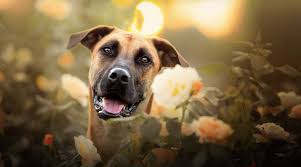
Although many dogs can have colors other than white with the black mask, it is believed that the Black Mouth Cur got its name from the black mask that many of them have on their muzzles. Others, though, say the name comes from the fact that the lips and gums often look darker than the typical “bubble gum” pink of most dogs. The Black Mouth Cur’s lips and gums, however, look reddish-pink to dark gray, giving them the nickname “black mouth.”
Still today, Black Mouth Curs are used as working dogs to catch hogs, to group sheep, and to go hunting. Furthermore, families who like dog games and events are getting more and more of them as pet dogs.
Characteristics of the Breed
Head: This kind of mesaticephalic skull is about average in size and shape compared to the rest of the body. The head is smooth and doesn’t have any extra skin or lines. There is enough bone and muscle in the head to show strength and power. The top skull is broad and has the same width as the front of the ears, giving the head depth. Well-developed temporal muscles may highlight a middle groove, which goes from the top to the occiput and disappears. It is important that the head and skull never look too thin or lack structure. When looked at from the side, the head is flat to slightly curved.
The eyes should be medium-sized, oval to almond-shaped, and can be green, amber, medium, or dark brown in color. It’s not unusual to have eyes that don’t match (or are different colors). People with blue eyes are not liked. The eye rims fit well and have excellent color. The eyes never get big. The orbital holes should have enough bone around them to protect the eyes. For this breed, any signs of entropion or ectropion are incorrect.
The ears should be medium in size, high on the skull, and drooping. The ears are broad across the base. An inner edge that lies close to the head is a sign of excellent ear carriage. Never let your ears hang down, be partially or fully straight, or be too long.
Full, deep, and broad describe the muzzle. The bridge, or line, of the muzzle is straight. Both the upper and lower jaws are well-developed, about the same length, and have adequate bone material. They never look snippy or weak.
Nose: The nose is well-pigmented and can be black or its color, depending on the coat. The pupils are wide open
Neck: It’s a suitable length for keeping your head up. It has a good shape and a lot of strength. From the wider, broader body to the head, the neck gradually narrows. No extra skin, throatiness, or dewlap is present on the neck, which is clean-cut.
Chest: Broad and deep, but never bigger. The brisket goes all the way to the elbows. The chest is well-developed in the front.
Body: Tight, strong, deep, and full of positive stuff. The body can have strength, speed, and power, but it’s never racy or polished. The width of the front and back legs is about the same.
The feet range from small, oval to round, featuring well-arched toes and robust pads. Toes may have webs on them. There may be one or two dewclaws.
Setting the tail low or neither high nor low on the croup is important. The tail should always flow naturally from the topline. The base is thick, and the tip gets thinner. It depends on the dog’s energy level and mood to carry the tail, but it is never hidden. Tails may be naturally long or bobbed in length, but they cannot be cut short medically. When the tail is pulled down, the tip of the last vertebra can be seen reaching to the hock joints. The tails are normally full-length. Any length less than the knee joints is acceptable for medium and bobbed tails. The tail may be straight, saber-shaped, sickled, pump-handled, or slightly curled.
Movement: It’s simple, quick, effective, and full of energy, all of which are signs of a healthy body. Forelegs and back pasterns should stay parallel to one another when going away. When viewed from the front, the forelegs should be parallel, and the elbows and paws should not move. When the back legs are stretched out, the back pads should be visible from the back. The front and back legs will move closer to the center of gravity as the speed goes up. The topline should stay firm and flat when looked at from the side. The forepaw can spread out in line with the nose thanks to strong frontal movement. When the legs are stretched, the space between the front and back feet should be equal. This indication shows that the horse is balanced, has good reach, and drives well. Any dog that shows signs of having trouble breathing or moving around will be taken out of the show ring.
To this day, the Black Mouth Cur is still mostly used as a working dog. They have a strong desire to do these things because they were bred to be excellent shooters and catch dogs. These traits can be a problem if they are placed with families who don’t work or hunt and don’t let the breed use its natural abilities, drives, and energy. When they are put in the right homes, Black Mouth Curs are loyal, calm, and reliable. People say that they form close bonds with their families and especially love “their” children. It’s possible for them to be cold toward strangers, and they tend to be defensive of their territory. For this breed to avoid behavior problems, it needs to be socialized, trained in respect from a young age, and given a daily “job.” People who like dog games like agility, search-and-rescue, and training are now interested in Black Mouth Curs. They are intelligent and want to please their owners, which makes them perfect for these tasks. It is incorrect for this breed to act aggressively or fearfully toward people without cause.