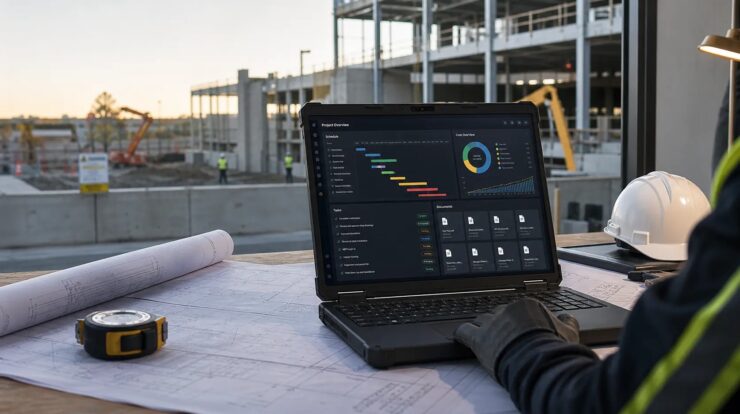
The construction industry continues to evolve rapidly in 2026. Contractors, builders, and project managers are under increasing pressure to complete projects faster, reduce costs, and maintain high-quality standards. Managing multiple teams, subcontractors, budgets, and deadlines simultaneously has become more challenging than ever.
Traditional methods such as spreadsheets, paperwork, and manual reporting are no longer sufficient for modern construction projects. These outdated processes often lead to communication gaps, scheduling conflicts, delays, and budget overruns.
This is where construction management software plays a vital role. Today’s digital platforms help construction professionals streamline operations, improve collaboration, and gain complete visibility into every phase of a project. Many solutions now incorporate artificial intelligence, automation, and cloud-based technologies to make project management more efficient.
In this guide, we explore the best construction management software solutions for contractors and project planning in 2026.
What Is Construction Management Software?
Construction management software is a specialized digital solution designed to help construction companies plan, organize, execute, and monitor projects from start to finish.
These platforms typically include features such as:
- Project scheduling and planning
- Budget and cost management
- Resource allocation
- Document storage and control
- Team collaboration tools
- Progress tracking
- Reporting and analytics
By centralizing project information, construction software helps contractors improve productivity, reduce errors, and deliver projects more successfully.
Why Construction Management Software Matters in 2026
Modern construction projects face numerous challenges, including rising material costs, labor shortages, strict regulatory requirements, and increasingly complex project scopes.
Construction management software addresses these issues by automating repetitive tasks and providing real-time project insights.
Major Benefits Include:
1. Enhanced Project Planning
Advanced scheduling tools help managers create realistic timelines, assign tasks efficiently, and reduce delays.
2. Improved Cost Control
Real-time expense tracking allows contractors to monitor budgets closely and prevent unexpected cost overruns.
3. Better Team Collaboration
Cloud-based platforms ensure that office staff, field workers, subcontractors, and stakeholders remain connected regardless of location.
4. Reduced Errors
Automation minimizes manual data entry mistakes and improves overall project accuracy.
5. Higher Productivity
Streamlined workflows help teams complete tasks faster while improving operational efficiency.
Essential Features to Look for
Before selecting a construction management platform, contractors should evaluate the features that best match their business needs.
Project Scheduling
Scheduling capabilities such as Gantt charts, calendars, and milestone tracking are essential for managing deadlines effectively.
Budget and Financial Management
A robust financial module should include cost estimation, expense tracking, invoicing, and budget forecasting.
Resource Management
Efficient resource allocation ensures labor, equipment, and materials are utilized optimally.
Document Management
Centralized document storage allows teams to access contracts, drawings, blueprints, and reports from one secure location.
Communication Tools
Built-in messaging and collaboration tools help teams communicate instantly and resolve issues quickly.
Mobile Accessibility
Mobile applications enable field teams to update project progress directly from construction sites.
Reporting and Analytics
Real-time dashboards and customizable reports provide valuable insights into project performance.
Top Construction Management Software in 2026
1. Procore
Procore remains one of the most recognized names in construction management.
Its comprehensive platform offers project management, budgeting, document control, field productivity tools, and seamless collaboration capabilities.
Best For: Large contractors and enterprise-level firms.
Advantages:
- Extensive feature set
- Excellent collaboration tools
- Strong industry reputation
Limitations:
- Premium pricing may not suit smaller businesses.
2. Autodesk Construction Cloud
Autodesk continues to dominate the construction technology landscape, especially for design-intensive projects.
The platform combines Building Information Modeling (BIM), cost management, document control, and AI-driven insights.
Best For: Engineering, architecture, and design-focused projects.
Advantages:
- Powerful BIM integration
- Advanced design capabilities
- Cloud-based collaboration
Limitations:
- Requires training to maximize benefits.
3. Buildertrend
Buildertrend is widely used by residential builders and remodeling companies.
It offers scheduling, budgeting, customer communication, and project management features in a user-friendly environment.
Best For: Home builders and renovation contractors.
Advantages:
- Easy to use
- Strong client communication tools
- Excellent mobile experience
Limitations:
- Limited advanced enterprise functionality.
4. CoConstruct
CoConstruct specializes in custom home construction and client collaboration.
Key features include project scheduling, change order management, budgeting, and customer selections.
Best For: Custom home builders.
Advantages:
- Highly customizable
- Excellent customer interaction features
Limitations:
- Less suitable for large commercial contractors.
5. PlanGrid (Autodesk Build)
PlanGrid focuses heavily on blueprint management and field collaboration.
Teams can easily access drawings, track issues, and share documents in real time.
Best For: Field teams and site supervisors.
Advantages:
- Outstanding mobile functionality
- Simplified blueprint management
Limitations:
- Limited financial management capabilities.
6. Monday.com Construction
Monday.com offers flexible workflows adaptable to construction operations.
Its automation tools, dashboards, and task management features make it popular among growing companies.
Best For: Small and medium-sized contractors.
7. Fieldwire
Fieldwire is designed specifically for on-site construction teams.
The platform supports task management, scheduling, blueprint viewing, and offline access.
Best For: Site supervisors and field crews.
8. Sage 300 Construction and Real Estate
Sage provides enterprise-grade accounting and financial management capabilities.
Its features include job costing, payroll integration, and advanced reporting.
Best For: Large construction organizations.
9. Smartsheet
Smartsheet combines spreadsheet familiarity with modern project management capabilities.
Its flexible structure appeals to mid-sized teams seeking customizable workflows.
10. e-Builder
e-Builder specializes in large-scale infrastructure and capital projects.
The platform offers project controls, document management, workflow automation, and budget oversight.
AI Is Transforming Construction Management
Artificial intelligence is rapidly reshaping construction operations in 2026.
Predictive Scheduling
AI algorithms analyze project data to identify potential delays before they occur.
Smart Cost Estimation
Machine learning improves budget accuracy by analyzing historical project costs.
Risk Identification
AI systems can detect risks early and recommend corrective actions.
Resource Optimization
Advanced analytics help managers deploy labor and equipment more effectively.
How to Choose the Right Construction Software
Selecting the ideal platform depends on several factors.
Consider Your Project Type
- Residential Projects: Buildertrend, CoConstruct
- Commercial Projects: Procore, Autodesk Construction Cloud
- Infrastructure Projects: e-Builder
Evaluate Your Budget
Smaller firms may prefer cost-effective solutions such as Monday.com or Fieldwire, while larger organizations can benefit from enterprise platforms like Procore or Sage.
Identify Required Features
Prioritize software that aligns with your operational requirements, whether financial management, field operations, or design integration.
Final Thoughts
Construction management software has become an essential investment for contractors in 2026. These platforms simplify project planning, improve collaboration, enhance cost control, and boost overall productivity.
Whether you manage residential homes, commercial buildings, or large infrastructure projects, selecting the right software can significantly improve project outcomes and profitability.
As AI, automation, and cloud technologies continue to evolve, construction companies that embrace digital transformation will remain better positioned for long-term success.